Larkspur
Not listed does not mean safe.
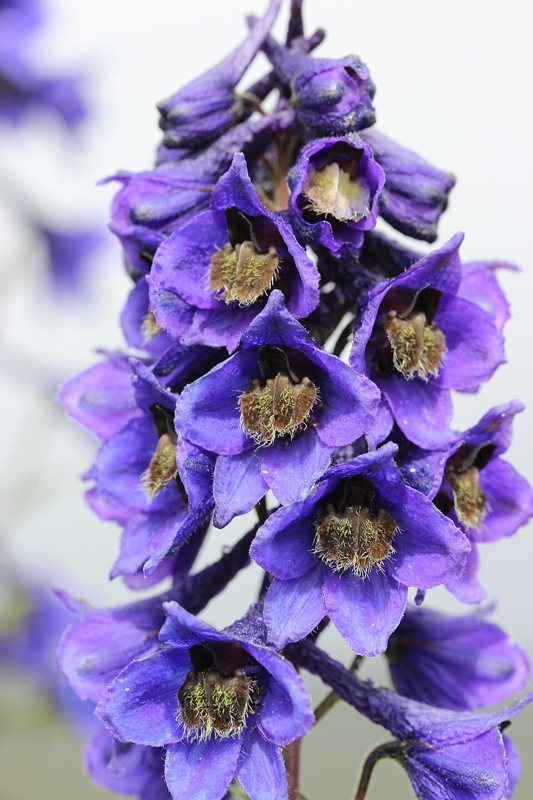
Björn S. · CC BY-SA 3.0 · Photo source · shows: Delphinium elatum

Evidence by animal
| Animal | Verdict | Basis | Plant parts | Sources | Evidence link |
|---|---|---|---|---|---|
| Companion mammals | |||||
| Cats | Cats: ⚠ Toxic | Not specified | ASPCA Toxic and Non-Toxic Plants Poison control | evidence | |
| Dogs | Dogs: ⚠ Toxic | Not specified | ASPCA Toxic and Non-Toxic Plants Poison control | evidence | |
| Horses & livestock | |||||
| Horses | Horses: ⚠ Toxic | Not specified | ASPCA Toxic and Non-Toxic Plants Poison control | evidence | |
| Goats | Goats: ! Caution | Cornell: genus-level listing | all | Cornell University University | evidence |
| Small mammals | |||||
| Rabbits | Rabbits: ⚠ Toxic | rabbit.org: listed as poisonous (not graded); WHRS Class 1: universal toxin | Not specified | House Rabbit Society (rabbit.org) Rescue/education group Wisconsin House Rabbit Society Rescue/education group | evidence |
| Hamsters | Hamsters: ⚠ Toxic | Peer-reviewed lab experiment, extract (PMID 2017783) | Not specified | evidence | |
| Rats | Rats: ⚠ Toxic | Peer-reviewed lab experiment, extract (PMID 2017783) | Not specified | evidence | |
| Mice | Mice: ⚠ Toxic | Peer-reviewed lab experiment, extract (PMID 2017783) | Not specified | evidence | |
| Reptiles | |||||
| Tortoises | Tortoises: ! Caution | Tortoise Trust: listed as toxic, degree uncertain | Not specified | Tortoise Trust Specialist charity | evidence |
Source excerpts
ASPCA Toxic and Non-Toxic Plants — Cats, Dogs, Horses
poison-control
Toxic to Dogs, Toxic to Cats, Toxic to Horses
Source checked 2026-10-27
Read original sourceHouse Rabbit Society (rabbit.org) — Poisonous Plants — Rabbits
rescue-education
rabbit.org: listed as poisonous (not graded) · rabbit.org list "Poisonous Plants" (compiled by the University of Illinois): plants "normally thought to be poisonous"; "others may cause a reaction in some but not in others". Not a graded risk.
Larkspur
Source checked 2026-10-27
Read original sourceWisconsin House Rabbit Society — Classes of Toxic Plants — Rabbits
rescue-education
WHRS Class 1: universal toxin · Wisconsin House Rabbit Society chapter list (G. Flentke, 2012): Class 1 — "Universal species toxins": "usually systemic toxins or local effect toxins of sufficient intensity to cause systemic problems" (list heading: "Do NOT expose rabbits to these plants.").
Larkspur
Source checked 2026-10-27
Read original sourceToxicity of extracts of tall larkspur (Delphinium barbeyi) in mice, hamsters, rats and sheep — Hamsters, Rats, Mice
peer-reviewed
Peer-reviewed lab experiment, extract (PMID 2017783) · Extract of tall larkspur (Delphinium barbeyi) dosed by subcutaneous injection or gavage in mice, hamsters, rats and sheep to measure LD50; this is a laboratory dosing model, not a report of pets eating the plant. Sheep were most susceptible to injection, followed by hamsters, mice and rats.
Peer-reviewed lab experiment, extract (PMID 2017783) · Extract of Delphinium barbeyi by injection or gavage; rats had the lowest susceptibility of the species tested. Laboratory dosing model, not plant ingestion by pets.
Peer-reviewed lab experiment, extract (PMID 2017783) · Extract of Delphinium barbeyi by injection or gavage; the authors judged mice the most suitable bioassay animal because of high susceptibility. Laboratory dosing model, not plant ingestion by pets.
Similarity of primary clinical signs of poisoning and lack of significant difference in slope of the dose-response curves implied that the overall effect of the larkspur alkaloids was the same for all rodent species tested.
Source checked 2026-10-27
Read original sourceTortoise Trust — Toxic Plants and Tortoises — Tortoises
specialist-charity
Tortoise Trust: listed as toxic, degree uncertain · Tortoise Trust toxic-plant list (from Highfield 2001): "Some plants on this list may be safely consumed in small or moderate quantities, but may be fatally toxic under certain circumstances or in large doses"; exact degree of toxicity unknown.
Larkspur
Source checked 2026-10-27
Read original sourceCornell University — Plants Poisonous to Livestock — Goats
university
Cornell: genus-level listing · all · Cornell lists Delphinium spp.; parts poisonous: all; poison: alkaloids delphinine, ajacine, and others. Cornell's entry is for the whole genus (Delphinium spp.); it does not name Delphinium species specifically, so this is shown as caution.
Delphinium spp. | Delphiniums, Larkspurs | cattle, humans, goats | all | alkaloids delphinine, ajacine, and others
Source checked 2026-10-27
Read original sourceNo evidence collected in this database yet for 14 animals
No evidence collected in this database yet for: Guinea pigs, Chinchillas, Ferrets, Pet birds (general), Parrots (macaws, Amazons, African greys…), Budgerigars (budgies), Cockatiels, Lovebirds, Canaries, Finches, Pigeons & doves, Bearded dragons, Iguanas, Chickens & other poultry
No supported claim has been collected for these animals. Not listed does not mean safe; do not infer suitability from another species.
Toxic principles
ASPCA, as published: Diterpene alkaloids Source
Clinical signs
ASPCA, as published: Unless there is a lack of suitable forage, horses typically do not consume toxic amounts of larkspur. The toxicity of the plant may vary depending on seasonal changes and field conditions; as the plant matures, it generally becomes less toxic. The alkaloids in the plant cause neuromuscular paralysis; clinical effects include constipation, colic, increased salivation, muscle tremors, stiffness, weakness, recumbency, and convulsions. Cardiac failure may occur, as can death from respiratory paralysis. Source
Last verified (ASPCA record): 2026-10-27. Source access dates and limitations.
Similar plants (same family)
Shared family is not a shared verdict. Check each plant separately.