Rosary Pea
Not listed does not mean safe.
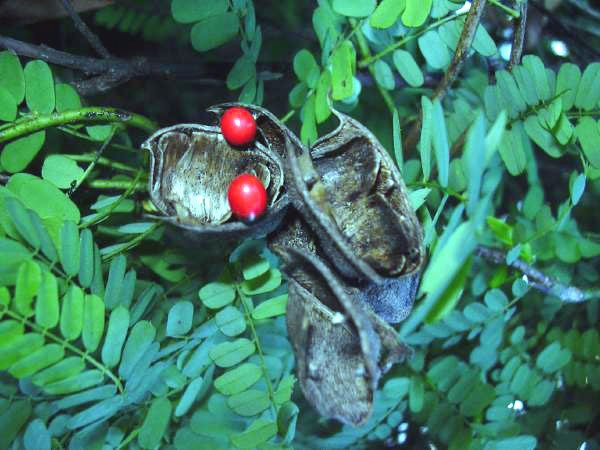
Forest & Kim Starr (USGS) · Public domain · Photo source · shows: Abrus precatorius

Evidence by animal
| Animal | Verdict | Basis | Plant parts | Sources | Evidence link |
|---|---|---|---|---|---|
| Companion mammals | |||||
| Cats | Cats: ⚠ Toxic | Not specified | ASPCA Toxic and Non-Toxic Plants Poison control | evidence | |
| Dogs | Dogs: ⚠ Toxic | Not specified | ASPCA Toxic and Non-Toxic Plants Poison control | evidence | |
| Horses & livestock | |||||
| Horses | Horses: ⚠ Toxic | Not specified | ASPCA Toxic and Non-Toxic Plants Poison control | evidence | |
| Small mammals | |||||
| Rabbits | Rabbits: ⚠ Toxic | rabbit.org: listed as poisonous (not graded); WHRS Class 1: universal toxin | Not specified | House Rabbit Society (rabbit.org) Rescue/education group Wisconsin House Rabbit Society Rescue/education group | evidence |
Source excerpts
ASPCA Toxic and Non-Toxic Plants — Cats, Dogs, Horses
poison-control
Toxic to Dogs, Toxic to Cats, Toxic to Horses
Source checked 2026-10-27
Read original sourceHouse Rabbit Society (rabbit.org) — Poisonous Plants — Rabbits
rescue-education
rabbit.org: listed as poisonous (not graded) · rabbit.org list "Poisonous Plants" (compiled by the University of Illinois): plants "normally thought to be poisonous"; "others may cause a reaction in some but not in others". Not a graded risk.
Rosary Pea
Source checked 2026-10-27
Read original sourceWisconsin House Rabbit Society — Classes of Toxic Plants — Rabbits
rescue-education
WHRS Class 1: universal toxin · Wisconsin House Rabbit Society chapter list (G. Flentke, 2012): Class 1 — "Universal species toxins": "usually systemic toxins or local effect toxins of sufficient intensity to cause systemic problems" (list heading: "Do NOT expose rabbits to these plants.").
Rosary pea
Source checked 2026-10-27
Read original sourceNo evidence collected in this database yet for 19 animals
No evidence collected in this database yet for: Guinea pigs, Hamsters, Rats, Mice, Chinchillas, Ferrets, Pet birds (general), Parrots (macaws, Amazons, African greys…), Budgerigars (budgies), Cockatiels, Lovebirds, Canaries, Finches, Pigeons & doves, Tortoises, Bearded dragons, Iguanas, Goats, Chickens & other poultry
No supported claim has been collected for these animals. Not listed does not mean safe; do not infer suitability from another species.
Toxic principles
ASPCA, as published: Abrin (lectin or a toxalbumin) and abric acid (a glycoside) Source
Clinical signs
ASPCA, as published: Severe vomiting and diarrhea (sometimes bloody), tremors, high heart rate, fever, shock, death. Seeds are very toxic (seed coat must be broken). Source
More from veterinary sources
Last verified (ASPCA record): 2026-10-27. Source access dates and limitations.
Similar plants (same family)
Shared family is not a shared verdict. Check each plant separately.